


How Spaces Shape Us: A Closer Look into the Psychology of Design
August 24, 2026
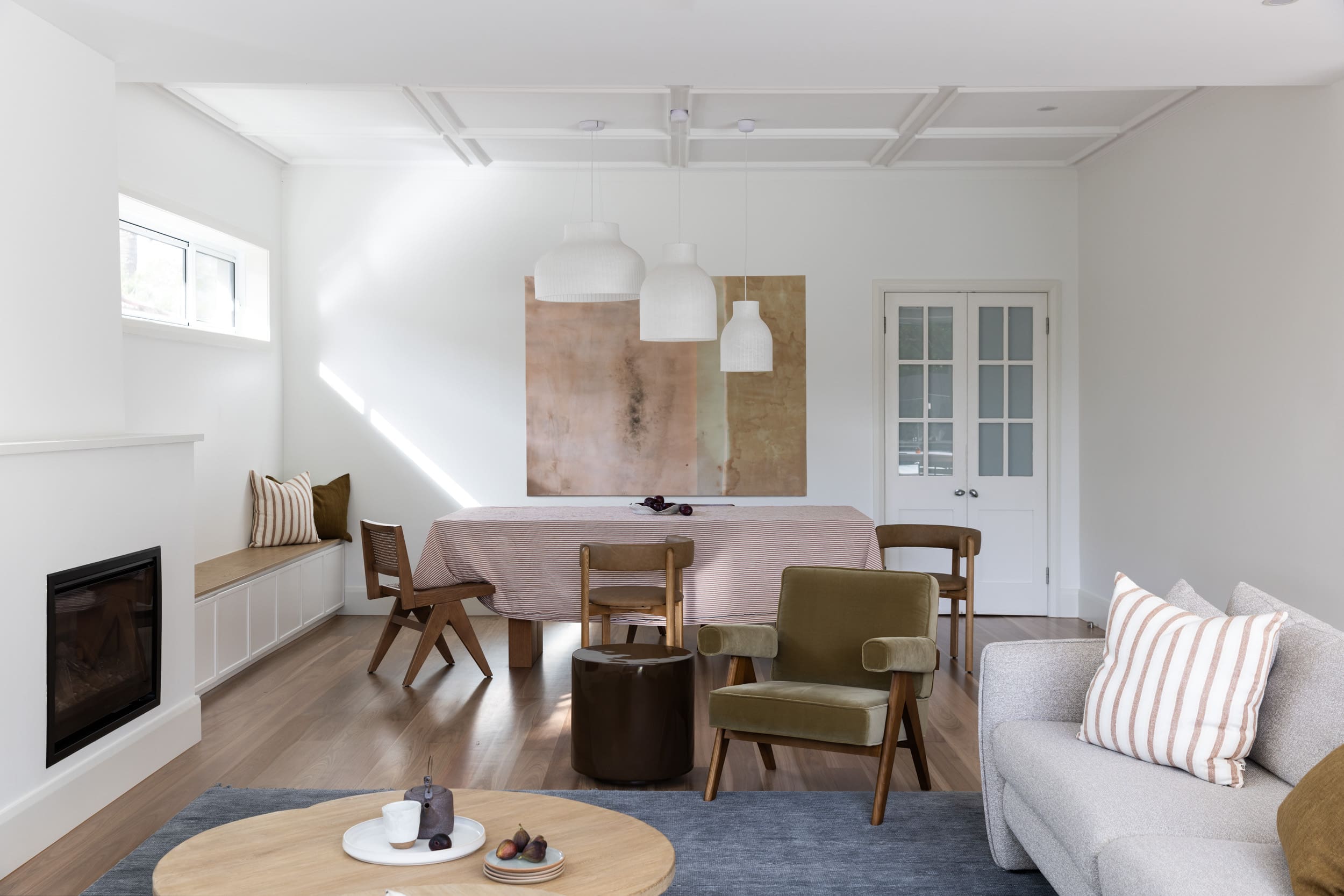
Have you ever stepped into a room and instantly felt calm, or in contrast, found yourself unsettled without knowing why? Spaces can have a significant influence on our mood. It ultimately shapes how we think, feel, and behave. The psychology of design is more than aesthetics; it’s about creating environments that make you feel nurtured and at ease. We see it in the way light and colour interplay or how a space flows naturally around us, and the textures under our fingertips. At Sunday Homes, we believe every detail has the ability to shift our mood and anchor that effortless feeling within our home.
Colour is one of the first things we notice in a space, and it has a profound impact on our emotions. Blue and green hues are often associated with calm and serenity, evoking a sense of restfulness. Red and yellow hues on the other hand, can energise and stimulate conversation. Neutrals, soft creams, and muted earth tones often form the foundation of our palettes. These foster feelings of ease and timelessness while creating a canvas on which life can unfold gently (Faber Birren, Colour and Human Response). Consider a moment when a colour shifted your mood instantly. Walking into a light, sunlit living room might evoke relief and clarity, while a dimly painted hallway could feel confining. The right palette doesn’t just look beautiful, it should make us feel seen and supported.
Light is another invisible sculptor of our experience. Natural daylight has been shown to improve mood, boost productivity, and even support physical health by regulating our circadian rhythms (Harvard Health Publishing, “Daylight and Wellbeing”). The soft glow of morning sunlight streaming into a kitchen can signal a fresh start, while the gentle dim of evening light in a living room invites relaxation and reflection.
Artificial light can replicate some of these effects, but it is the interplay between natural and designed light that truly shapes the atmosphere. Bright, open interiors can feel uplifting and energising, while darker, more intimate spaces supported by mood lighting can provide the cocooning comfort we crave after a long day (Sternberg, Healing Spaces: The Science of Place and Well-Being). Thoughtful lighting design considers not only brightness but quality, direction, and timing. It shapes environments that adapt to the rhythm of our daily lives.
Texture is where design becomes truly human. The feeling of materials beneath our hands, such as soft linen, smooth stone and timber, gives a sense of warmth and connection. Layered textures add depth and life to a space, creating a sensory landscape that draws us in. Research in sensory psychology emphasises that tactile experiences shape our comfort and wellbeing in ways that colour and light alone cannot (Handbook of Multi-sensory Processes). Imagine running your hand along a cool, polished marble bench, leaving a feeling of refinement and precision. In contrast, the worn, tactile surface of a timber table tells another story. From upholstery and flooring to ceramics and textiles, each texture adds a distinct layer and narrative to a design. When combined intentionally, these textures allow a home to feel both sophisticated and uniquely refined.
Beyond sensory cues, the way a space flows influences how we feel. Intuitive circulation, proportion, and balance can create calm. In contrast, cluttered or awkward layouts may induce stress. Humans are inherently responsive to spatial cues. Openness tends to invite social connection and movement, while enclosed nooks provide refuge and privacy (Lawson, The Language of Space). Consider moments when a space has either empowered or restricted you. A long, unobstructed hallway leading to an airy living area can feel expansive and freeing. Conversely, a cramped, poorly arranged room can create a subtle tension, leaving you longing for order and breathing room. Symmetry, clear sight-lines, and thoughtful balance are tools designers use to craft environments that align with our innate desire for both safety and freedom (Journal of Architectural and Planning Research).
At Sunday Homes, we approach design with this understanding at our core. Every colour choice, beam of light, textured surface, and spatial arrangement is considered not just for its visual appeal, but for the way it will make you feel each day. Our goal is to create homes that do more than look beautiful; they support the lives lived within them. Because when a space is designed for how we truly live, it doesn’t just surround us. Instead, it uplifts us.
